
Cheesense · Recipe
Make Asiago d'Allevo
— aged, complex, and worth every day of waiting.
One of Italy's great mountain cheeses — with a depth of flavour that only time and the right technique can build.
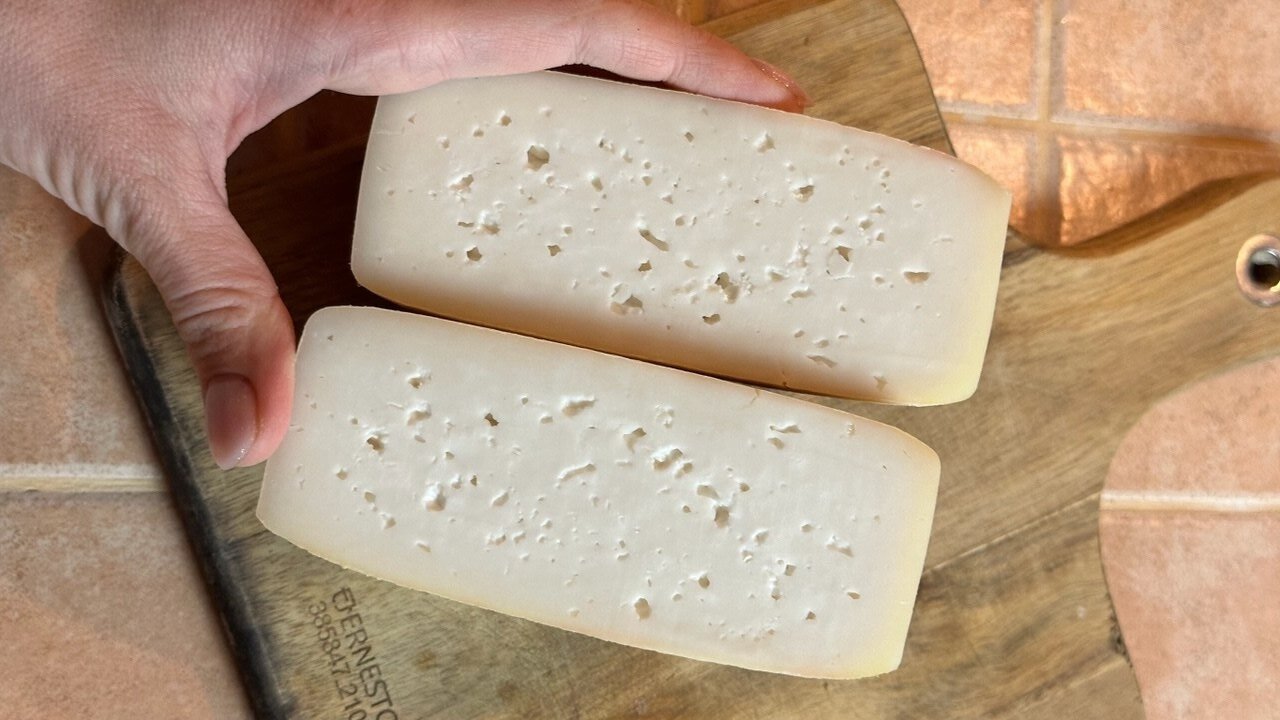
What's inside — $35, 6 months access
- Professional tech card — A complete process chart covering milk preparation, starter and rennet addition, curd cutting and cooking, pressing schedule, brining, and the full aging and rind-care protocol — with exact temperatures, timing, and targets at every stage.
- Detailed video guide — Every stage filmed in real time: from curd cooking and pressing through rind development and turning schedule across weeks of aging. You see what a well-pressed wheel looks like, how the rind should feel, and how to read the cheese as it develops.
- Full equipment & culture list — Everything you'll need — cheese press, molds, brine, thermophilic starter cultures, rennet, aging setup — listed clearly and sized for home and small-batch production.
- Common mistakes breakdown — The failures specific to pressed and aged styles — uneven pressing, rind cracking, gas formation, bitter or chalky paste, swelling during aging — covered in detail with causes and fixes.
Who this is for
Made for
two kinds of cheesemaker
- Home cheesemakers ready to move beyond fresh and semi-soft styles into something that ages — and who want to understand what it actually takes to produce a wheel that improves over months rather than deteriorating.
- Small artisan creameries looking to add a pressed, aged format to their range. Asiago d'Allevo is versatile — sellable young at three months, or held longer for a premium product with genuine complexity.
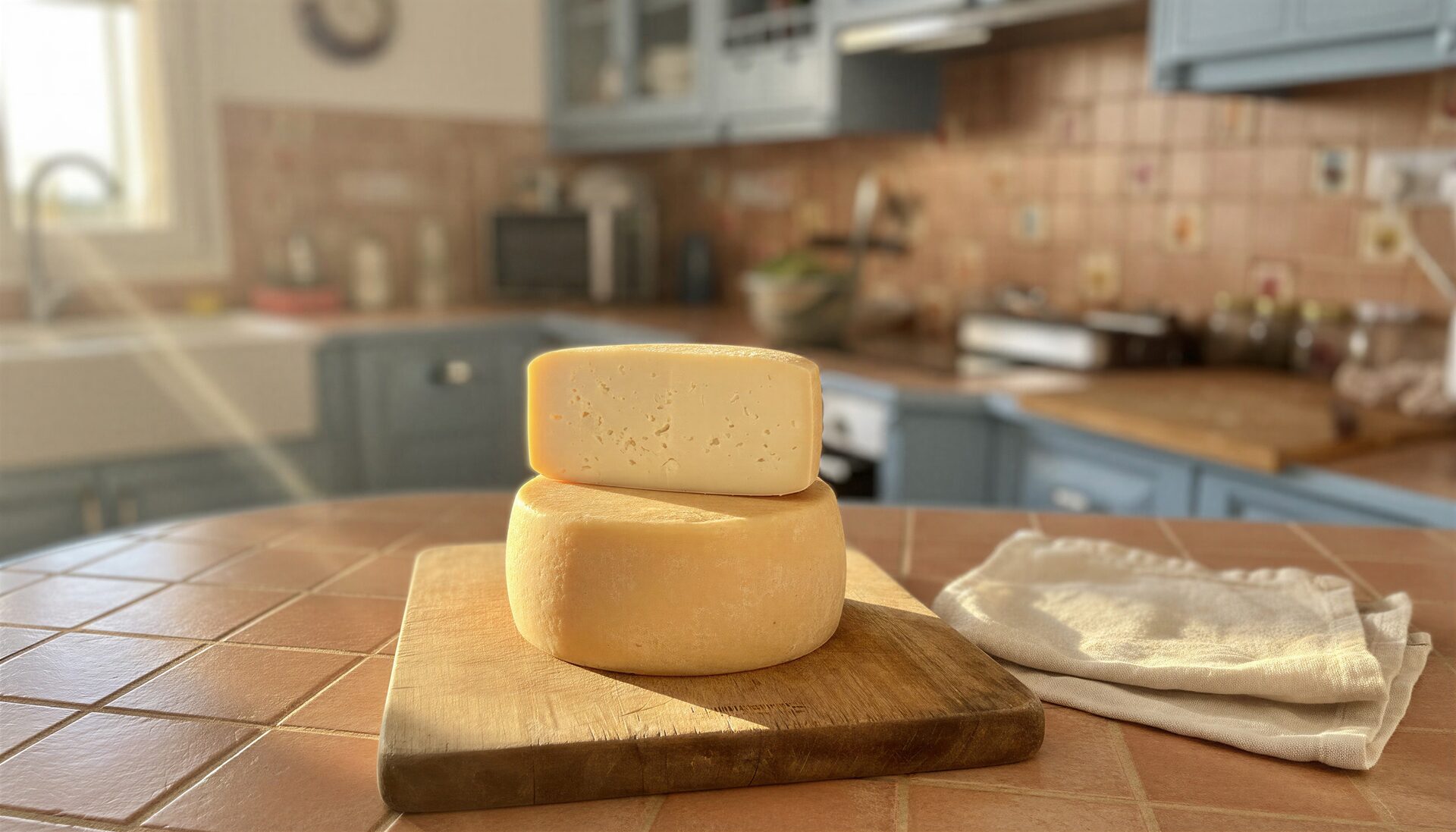
What you'll walk away with
More than one cheese —
a whole family.
Asiago d'Allevo is a gateway into the world of aged pressed cheeses — a family that includes Montasio, aged Gouda, Comté, and Manchego. Once you understand how curd cooking, pressing, and long aging work together, you have the foundation for all of them.
You'll also develop a different relationship with your cheese. Tending a wheel over weeks and months — turning it, brushing it, watching it change — builds an intuition about how cheese lives and breathes that no fresh recipe can teach you.
For small creameries — a product with real market potential: a cheese that gets more valuable the longer it ages, that tells a story, and that sits in a different category from anything fresh or soft in your range.
Made with cow's milk.
Adapts to mixed milk, too.
Access your materials the moment you pay — and return to them every time you start a new wheel.
One-time payment · 6 months access
Get the recipe →Your guide
Why you can
trust Tetyana
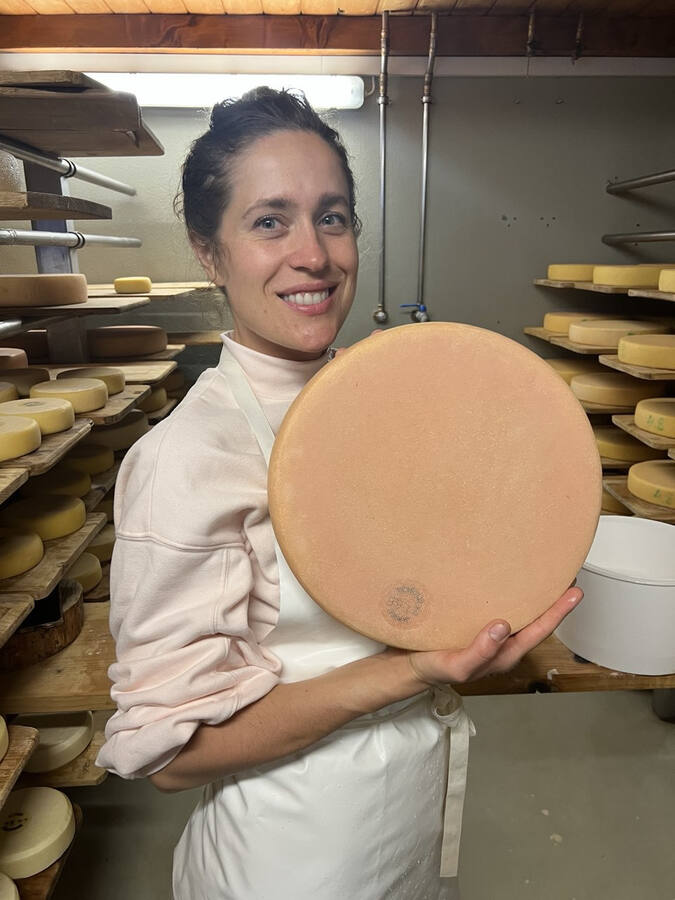
I'm Tetyana Dyadechko — cheesemaster and mentor. I explain the logic behind every step, not just the recipe.
Short history
Asiago d'Allevo comes from the alpine pastures of northeastern Italy, where it has been made for centuries. Aged from three months to over a year, it develops a firm, granular paste with flavours that shift from milky and mild to sharp, nutty, and deeply savoury — depending entirely on how long you're willing to wait.
It is exactly the kind of cheese that rewards patience. And exactly the kind of cheese that goes wrong when the early stages — the pressing, the acidification, the rind care — aren't done right.
This recipe gives you the full picture: what happens at each stage, why it matters, and how to build a wheel that actually ages well rather than one that cracks, swells, or tastes of nothing after three months in the cave.
Working with cow's milk by default — and the recipe includes full adaptation notes for mixed-milk variations, so you have room to experiment once you've mastered the base process.
A note from the author